Shop
Call 1 866 441 7522
4584 Blackcomb Way, Whistler BC Open Wednesday–Sunday, 10 am – 5 pm
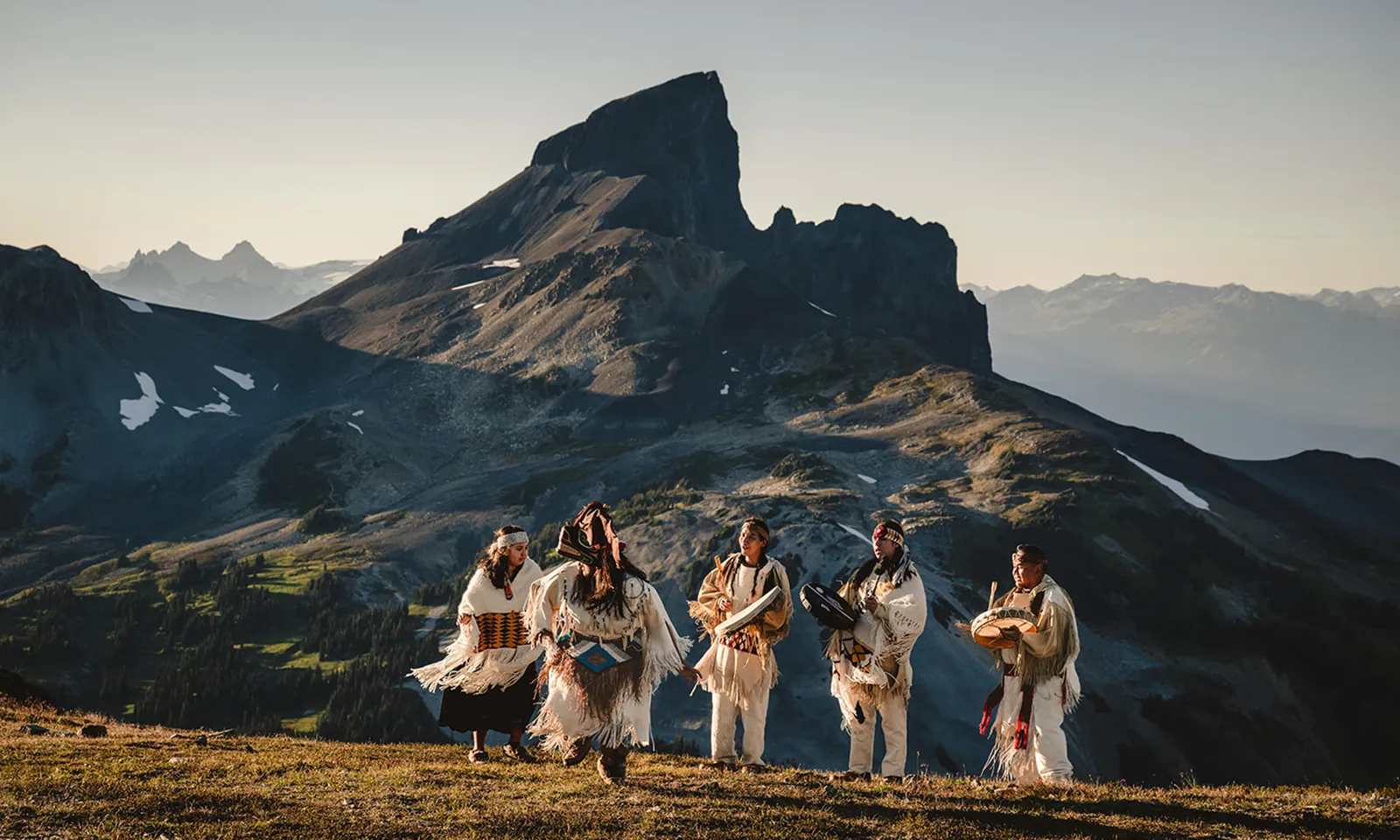
Black Tusk above the forest of the Sea to Sky corridor

The history of the Squamish and Lil'wat Nations

Two Nations, two languages, one shared territory. The story runs from the eruption of Black Tusk to a cultural centre built in Whistler in 2008.

Read the exhibits

01The territory

Whistler sits on shared land

The Sḵwx̱wú7mesh (Squamish) people come from the coast — the inlets, rivers and islands at the head of Howe Sound. The Líl̓wat7úl (Lil'wat) come from the interior, from the valleys around Mount Currie and Pemberton. Their territories meet in the mountains around Whistler, and both Nations have used this valley for hunting, gathering, travel and ceremony for generations.

The two Nations formalised that relationship in a protocol agreement, and the cultural centre is one of its results: a building on shared land, run by both Nations together, rather than by one alone.

  • Sḵwx̱wú7meshCoast Salish — Howe Sound, Squamish Valley and Burrard Inlet
  • Líl̓wat7úlInterior Salish — the Pemberton and Mount Currie valleys
  • SharedThe Whistler valley and the mountains around it
  • LanguagesSḵwx̱wú7mesh and Ucwalmícwts, both being revitalised
  • GovernanceElected councils, with hereditary chiefs and family systems

02Three stories to start with

What the landscape is telling you

Black Tusk, the mountain above Whistler
Story

Thunderbird and Black Tusk

The mountain was once a full peak. When Thunderbird brought the two-headed serpent down on it, the top was broken off — which is why Black Tusk has a black, jagged crown and the valley below is filled with the serpent's body, now called the Barrier.
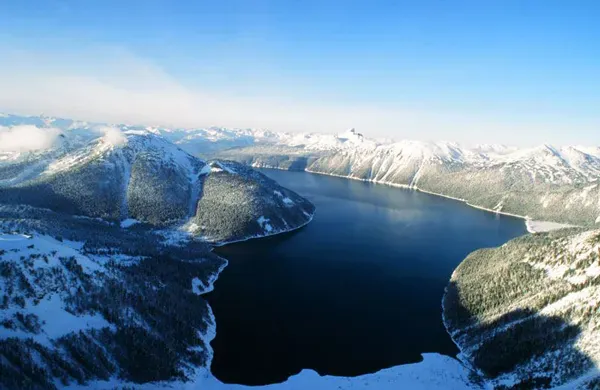
Garibaldi Lake below the Barrier
Place

The Barrier

The rubble at the foot of Black Tusk is the serpent's body in the telling. Geologists read it as a lava flow; both readings describe the same shape, and the story is how the shape was remembered.

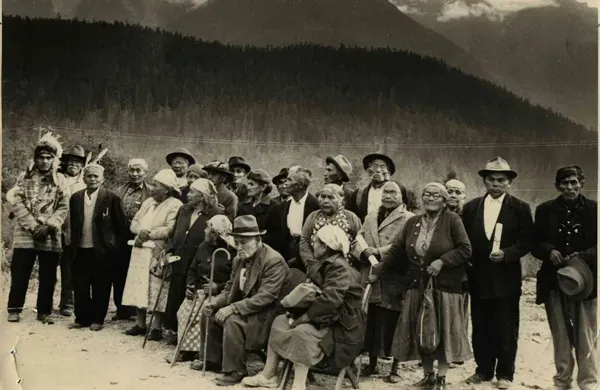
An Elder speaking at the centre
Symbol

The spindle whorl

The spindle whorl at the centre of the logo is a tool for spinning wool into yarn — a woman's technology, and a symbol of the work that holds a culture together.

03From territory to centre

How the centre came to be

For decades, visitors came to Whistler and left knowing little about whose land they had been on. The two Nations agreed that a cultural centre on shared territory could change that — a place where the cultures would be presented by the people themselves, not interpreted on their behalf.

The building opened in July 2008: 30,400 square feet on six forested acres beside Fitzsimmons Creek, with a Great Hall built in the longhouse tradition and an Istken Hall built on the plan of a pit house. The collection has grown since, and so has the programming — tours, workshops, performances, a language tour and a podcast.

Carved figures and regalia in the gallery
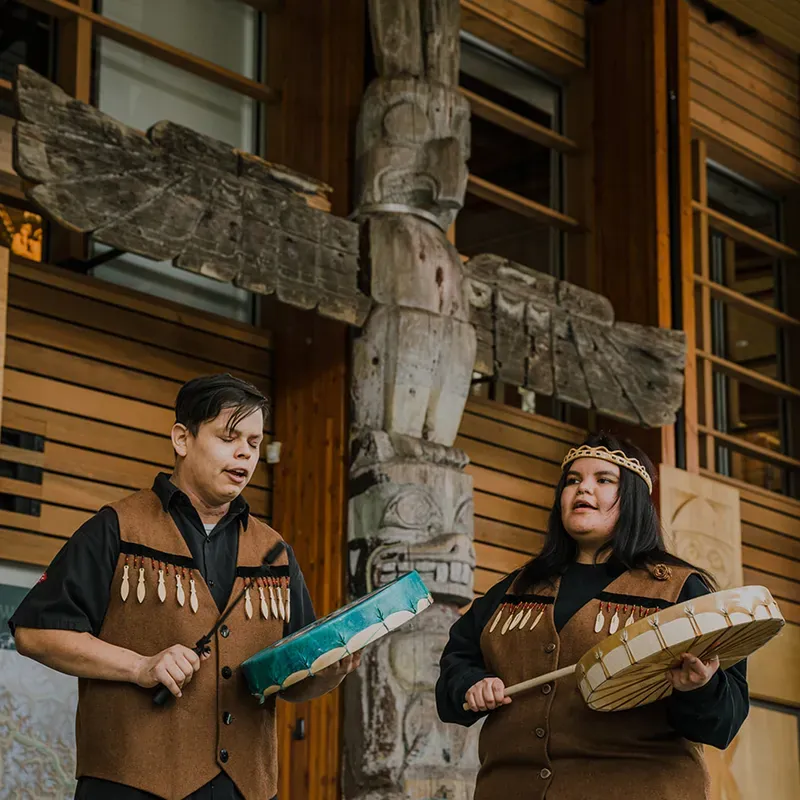
A welcome song in the Great Hall

Hear the history from the people who carry it

The hourly guided tour is included with admission and led by a Cultural Ambassador from one of the two Nations.

Guided tours